

Provinces whose Pharmacare plans try to contain
costs by micro-managing the medicines that beneficiaries use
short-change both patients and taxpayers, according to
Canadian Pharmacare: Performance, Incentives, and Insurance, released today by The Fraser Institute.
This finding should cause provincial governments to re-think
approaches such as the Common Drug Review, whereby a
government-appointed committee makes national recommendations on
the benefits of individual drugs.
Provincial drug-benefit plans now account for almost half of the
country's prescription spending and provinces vary widely in how
they provide this coverage. This new study discusses the
differences between provincial drug plans with respect to breadth
of coverage and cost sharing between patients and taxpayers, and
introduces two new measurements to describe how provincial
Pharmacare plans perform as insurers and how generous they are to
their beneficiaries.
Success on both the new performance indexes in this study, and in
managing spending, are associated with policies such as
cost-sharing with beneficiaries (through co-payments and
deductibles) and limiting benefits via income-testing. However,
government-run drug benefit plans should not be interfering in
deciding which medicines are best for patients.
"The government should be subsidizing the patient, not the
producer," said John R. Graham, co-author of the paper and an
Adjunct Scholar at The Fraser Institute. "If there are people who
can't afford to eat, the best policy is to give those people
money to buy groceries, not for the government to promise to feed
everybody at nominal cost, and then ration out bread and water to
the whole population. Unfortunately, that's the way many
provinces have approached prescription benefits."
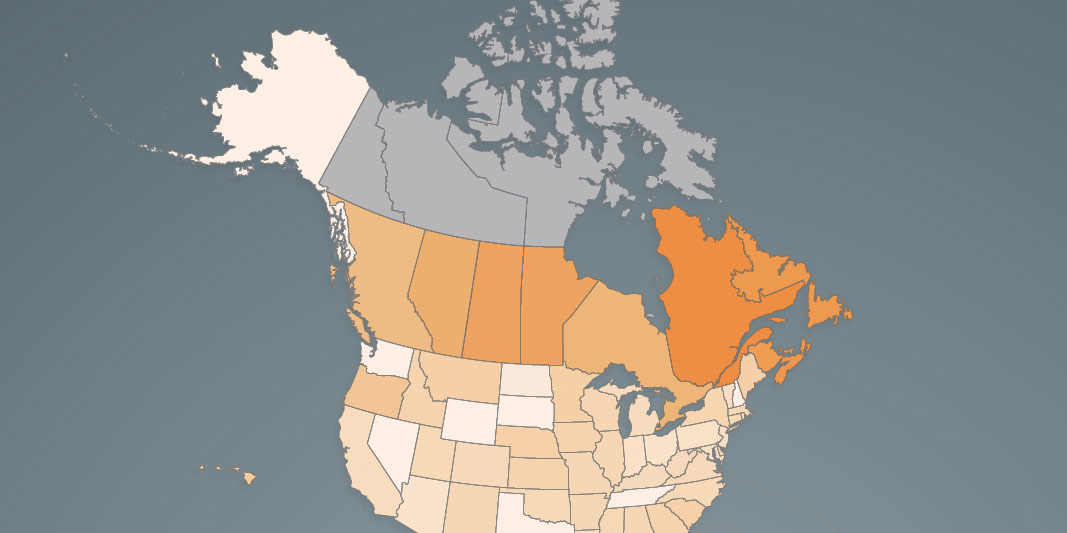
The first measure in this new study is the Prescription Choice
Index. The index assesses how quickly provinces accept new
medicines for coverage by their public drug-benefit plans. It
addresses the question of how patients might rank different
provinces' programs, if they were able to choose easily between
them. Quebec, Alberta, and Saskatchewan lead by this measurement,
with the Atlantic Provinces faring the worst.
The second measure in the study is the Prescription Insurance
Index, which gauges how well provincial Pharmacare plans function
as insurers, which offer protection against catastrophic disease
rather than relatively predictable illness.
This is an important index because provincial Pharmacare plans
operate differently from the government monopoly for supplying
"insurance" for physicians' and hospitals' services, which covers
costs from the first dollar. Provincial drug-benefit plans have
patients pay some costs, thus giving them some control of how the
money is spent.
Saskatchewan, Alberta, and Quebec lead this index as well, with
Prince Edward Island, Ontario, and Newfoundland lagging. When the
two indexes are combined, Quebec likely performs best overall,
with the Atlantic provinces performing the worst.
The study also compares these results with how much each
provincial drug benefit plan spends per resident, on an
age-adjusted basis. Again, Quebec likely performs best on "value
for money" according to these criteria, whereas Saskatchewan and
Alberta purchase their performance at a high cost to taxpayers.
"Ontario spends a lot but buys little, according to our
measurements. On the other hand, New Brunswick and Prince Edward
Island spend little on Pharmacare and receive little in return,"
noted Graham.