VANCOUVER, BC-Tax Freedom Day falls on June 6 this year,
meaning the average Canadian family had to work more than five
months in 2009 to pay the total tax bill levied on them by all
levels of government, according to the Fraser Institute's
annual Tax Freedom Day calculations.
If Canadians were required to pay all of their taxes up
front, they would have to pay each and every dollar they earned
to governments prior to Tax Freedom Day.
"Tax Freedom Day provides Canadians with a clear, easy to
understand, and accurate estimate of the total amount of taxes
they pay to all levels of government," said Niels Veldhuis,
Fraser Institute Director of Fiscal Studies.
"The total tax bill paid by Canadians is much more than
income tax. The reality is, the total tax bill assessed by all
levels of government requires almost 43 per cent of an average
family's annual income."
The taxes used to compute Tax Freedom Day include income
taxes, property taxes, sales taxes, profit taxes, health,
social security and employment taxes, import duties, license
fees, taxes on the consumption of alcohol and tobacco, natural
resource fees, fuel taxes, hospital taxes and a host of other
levies.
The Fraser Institute has also produce a short, light-hearted
video
to commemorate Tax Freedom Day.
An Earlier Tax Freedom Day
This year Tax Freedom Day falls three days earlier than
2008, when it was June 9. The latest Tax Freedom Day in
Canadian history was in 2000, when it fell on June 24.
While the federal government recently provided some minor
tax relief, most notably increasing the basic personal
exemption for income tax as well as various new or expanded tax
credits, and some provinces decreased taxes in 2009, Veldhuis
points out that these actions are not the primary reason for
the earlier Tax Freedom Day.
When the economy slows and incomes stagnate or decline, an
average family's tax burden tends to be reduced to a greater
extent than its income. The reason for this accelerated
decrease in the tax burden compared to income is the
progressive nature of Canada's tax system.
"Under our progressive tax system, families pay more
proportionately in taxes as they earn more income. The reverse
is also true. It is this reverse phenomenon that is driving
much of the decrease in Tax Freedom Day," Veldhuis said.
Budget Deficits
Canadians may be thinking about the economic and tax
implications of the government's recent return to budget
deficits. Indeed, most federal and provincial governments are
forecasting budget deficits for 2009. But today's deficits must
one day be paid for by taxes. Deficits should therefore be
considered as deferred taxation. For this reason, the Fraser
Institute calculates a Balanced Budget Tax Freedom Day, the day
on which Tax Freedom Day would fall if governments were obliged
to cover current expenditures with current taxation and were
not able to defer any of the tax burden by running a
deficit.
Under this scenario, Balanced Budget Tax Freedom Day arrives
on June 25 - 19 days later than Tax Freedom Day.
"By running substantial budget deficits, Canadian
governments of today are accumulating debt. Eventually, the
debt must be paid and we could see Tax Freedom Day move later
in the calendar as a result," Veldhuis said.
Tax Freedom Day Among the Provinces
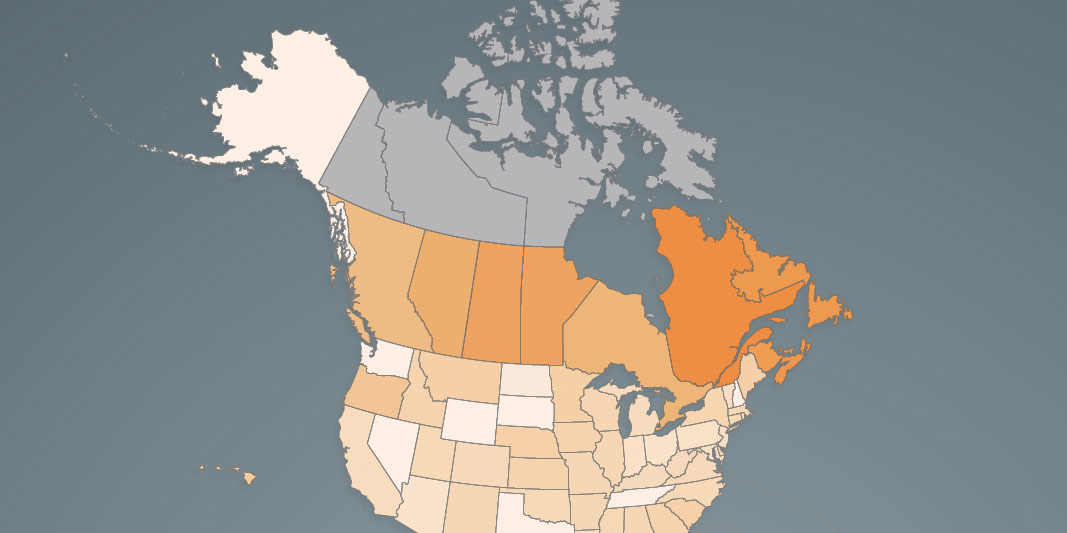
Tax Freedom Day varies from province to province, depending
on the taxation levels of provincial and local governments.
Alberta continues to enjoy the earliest Tax Freedom Day on May
16, followed by New Brunswick on May 31, then Ontario on June
1. Next comes Prince Edward Island on June 3, followed by
Manitoba (June 7), British Columbia (June 8), Nova Scotia (June
11), and Quebec on June 12. Newfoundland and Labrador has the
second-latest Tax Freedom Day, June 16, surpassed only by
Saskatchewan where Tax Freedom Day falls on June 20.
There is a also an ongoing question as to whether natural
resource royalties are actually a tax or simply the conversion
of an asset (natural resources such as oil and gas) into an
income stream for the province. If natural resource revenues
are excluded, Tax Freedom Day is 18 days earlier in
Newfoundland and Labrador, 16 days earlier in Saskatchewan, six
days earlier in Alberta, and four days earlier in British
Columbia.
Total Tax Bill
In 2009, the average Canadian family (with two or more
individuals) will earn $88,432 and pay a total of $37,699 in
taxes, for a total tax bill amounting to 42.6 per cent of its
income.
Income for the average Canadian family will decrease by 2.5
per cent ($2,245) between 2008 and 2009 with the total tax bill
also decreasing by 4.7 per cent ($1,846).
"There's no doubt our taxes pay for some essential
government services. But the debate Canadians need to have is:
are we are getting value for our tax dollars? In order to
discuss that question in a rational way, we need to have a
clear idea of the price we pay for government services. In
other words, what is our total tax bill?" Veldhuis said.
Canadians can calculate their personal Tax Freedom Day using
The Fraser Institute's Personal
Tax Freedom Day Calculator
.