More than half of Canadians surveyed in 2006
reported using at least one form of complementary or alternative
medicine or treatment during the previous year, according to a
new report published today by independent research organization,
The Fraser Institute.
The report,
Complementary and Alternative Medicine in Canada: Trends in Use
and Public Attitudes, 1997-2006, is based on a survey of 2,000 adult Canadians conducted in
2006. It follows up on a similar survey done in 1997.
The survey showed 54 per cent of respondents used at least one
form of alternative or complementary therapy in the year prior to
the survey, an increase of four percentage points over the 1997
result of 50 per cent.
"This increased use of alternative therapies is another indicator
of Canadians' desire to have more choice and control over their
health care options," said Nadeem Esmail, The Fraser Institute's
Director of Health System Performance and author of the report.
The most commonly used complementary and alternative medicines
and therapies reported were massage (19 per cent), prayer (16 per
cent), chiropractic care (15 per cent), relaxation techniques (14
per cent), and herbal therapies (10 per cent).
Most users of alternative therapies said they did so to prevent
future illness from occurring or to maintain health and vitality.
Of those who used alternative medicine in the 12 months prior to
the 2006 survey, 53 per cent of respondents (down slightly from
56 per cent in 1997) had not discussed their use of alternative
medicine with their doctor.
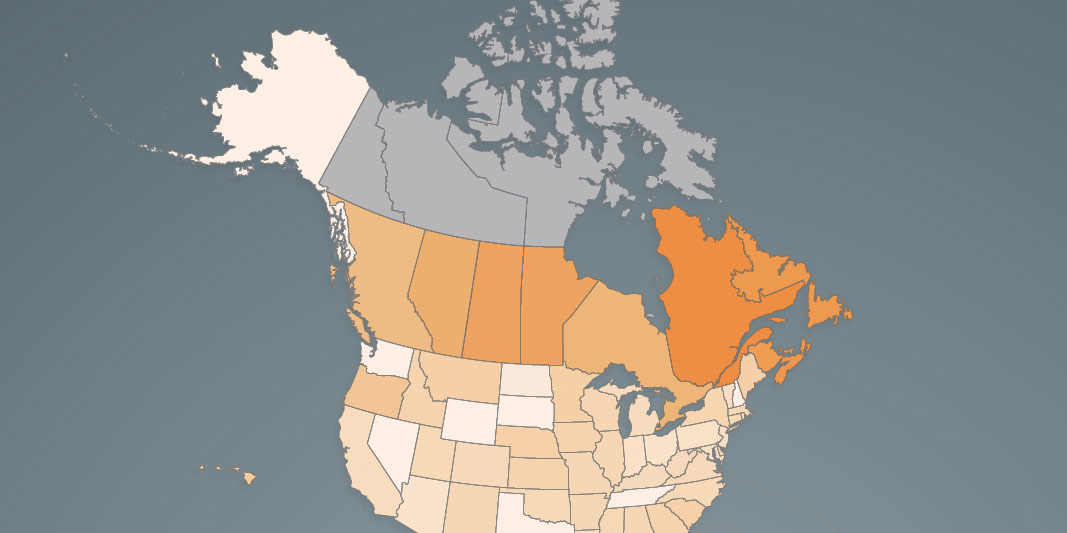
On a provincial basis, Alberta saw the largest increase in the
use of alternative therapies in the year previous to the 2006
survey (68 per cent compared to 54 per cent in 1997), followed by
Ontario (55 per cent compared to 50 per cent in 1997), and
British Columbia (64 per cent from 60 per cent in 1997). Quebec
and Saskatchewan/ Manitoba both experienced a one per cent
increase, moving from 44 to 45 and from 58 to 59 per cent
respectively, while Atlantic Canada experienced a decrease in the
use of alternative therapies, falling to 39 per cent in 2006 from
45 per cent in 1997.
Despite the increased use of alternative medicine, the majority
of Canadians still consider medical doctors the main providers of
health care with almost half of respondents in 2006 seeing a
doctor before turning to a provider of alternative therapy.
Additionally, a higher proportion of respondents saw a medical
doctor for their condition regarding treatment for eight of the
10 most common medical conditions.
"These results show Canadians retain confidence in physicians.
But since many of the most common problems Canadians suffer from
are chronic - allergies, back or neck problems, arthritis and
rheumatism - they require more than just symptomatic treatment.
Consequently, Canadians are looking for alternatives," Esmail
said.
What is interesting, he added, is that most alternative and
complementary treatments are not covered by government health
insurance plans. Yet a large number of people choose those
options.
"When it comes to health and well-being, a significant number of
Canadians are willing to spend their own money."
Esmail estimates that Canadians spent approximately $7.8 billion
out of pocket on alternative medicine in the year before the 2006
survey -- a significant increase from the nearly $5.4 billion
(inflation-adjusted) spent in 1997. In 2006, more than $5.6
billion was spent on providers of alternative therapy, while
another $2.2 billion was spent on herbs, vitamins, special diet
programs, books, classes and equipment.
But the survey also shows the majority of Canadians (59 per cent)
believe that alternative therapies should be paid for privately,
not by provincial health plans. The highest level of support for
private payment came from the group that used alternative therapy
the most: 58 per cent of 18- to 34-year-olds used alternative
therapies in the 12 months prior to the 2006 survey, and 62 per
cent of them preferred that individuals pay for it privately.
Regionally, support for private payment in 2006 was strongest in
Quebec and Saskatchewan/Manitoba (66 per cent) and weakest in
Atlantic Canada (50 per cent). This is a notable change from 1997
when support was strongest in Atlantic Canada (71 per cent) and
weakest in British Columbia (48 per cent).
"In 2006, 74 per cent of Canadians say they have used alternative
therapies at some point in their lifetimes, and more than half of
Canadians have used alternative therapies in the year prior to
the survey," Esmail said.
"However, there are some notable differences between the regions
in Canada with respect to both use and attitudes towards
alternative medicine. Albertans and British Columbians are more
likely to see value in alternative therapies while skepticism
reigns in Atlantic Canada. A national consensus on this issue is
highly improbable."