MONTREAL, QC- Quebec has the third latest
Tax Freedom Day
in Canada, on June 19, ahead of only Saskatchewan and
Newfoundland and Labrador, according to The Fraser Institute's
annual Tax Freedom Day calculations.
On a national basis, Tax Freedom Day, the day Canadians have paid off the total tax bill imposed on them by government and can finally start working for
themselves, arrives on June 14, four days earlier than in
2007.
"Quebeckers spend almost half the year working to pay all
the various taxes levied on them by federal, provincial and
local governments. Every dollar they earn before June 19 would
be required to pay the taxes owing to all levels of
government," said Nathalie Elgrably-Lévy, the Fraser
Institute's Senior Economist, Québec et la francophonie.
"Quebeckers face one of the highest tax burdens in Canada.
Look next door to Ontario, where taxpayers celebrate Tax
Freedom Day 10 full days earlier than Quebecers."
Quebec's Tax Freedom Day Compared to Other
Provinces
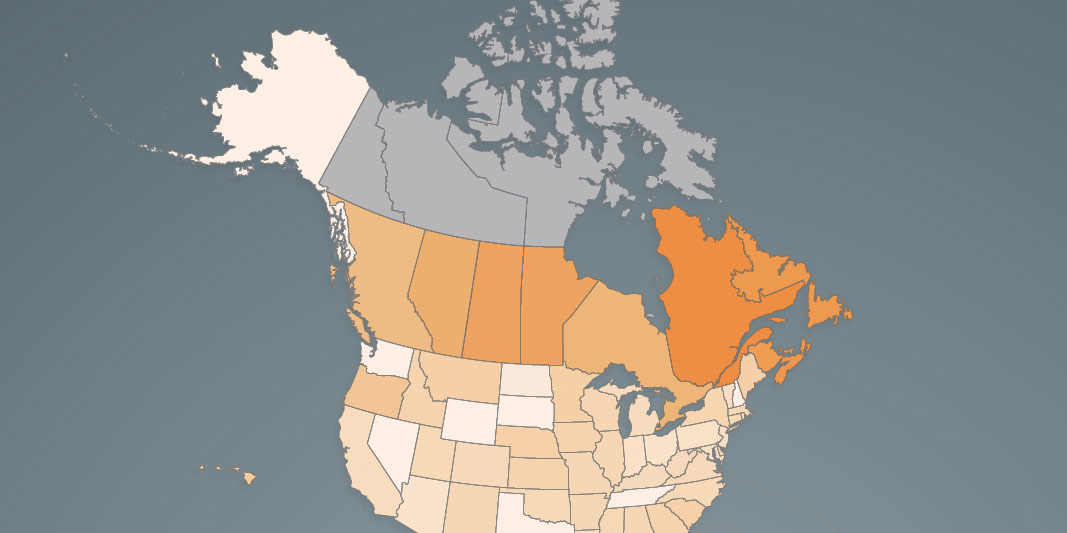
Alberta enjoys the earliest Tax Freedom Day on May 28,
followed by New Brunswick on June 3 and Prince Edward Island on
June 4. Next comes Manitoba (June 8), followed by Ontario (June
9), Nova Scotia (June 12), British Columbia (June 13), and
Quebec (June 19). Saskatchewan has the second-latest Tax
Freedom Day (June 20) with Newfoundland and Labrador waiting
the longest, until June 30.
However, if natural resource royalties are excluded from the
calculations, Quebec, at June 19, has the latest Tax Freedom
Day among all Canadian provinces. There is an ongoing debate
whether natural resource royalties are actually a tax or simply
the conversion of an asset (natural resources such as oil and
gas) into an income stream for the province. If natural
resource revenues are excluded, Tax Freedom Day is 27 days
earlier in Newfoundland and Labrador (June 3), 12 days earlier
in Alberta (May 16), 11 days earlier in Saskatchewan (June 9),
and five days earlier in British Columbia (June 8).
The Atlantic Provinces have also historically had some of
the country's earliest Tax Freedom Days in part because a large
share of their total revenue is transferred from other
provinces through the federal government's equalization
payments. Tax Freedom Day in those provinces, as well as in
Manitoba and Quebec, comes earlier than it would without these
transfers. On the other hand, Tax Freedom Days in the
traditional 'have' provinces of Ontario, Alberta, and British
Columbia come later than would be the case without these
transfers.
Reasons For An Earlier Tax Freedom Day
Quebec's June 19th
Tax Freedom Day
is an improvement on 2007, when Tax Freedom Day fell on June
24. In this sense, Quebec mirrored the rest of the provinces
where Tax Freedom Day arrived earlier in 2008 than in 2007. The
greatest improvements came in Manitoba (seven days), and
Saskatchewan and British Columbia (six days).
There are several reasons why Tax Freedom Day comes earlier
in 2008: the federal government's reduction in the Goods and
Services Tax (GST) to five per cent from six per cent, which
took effect on January 1, 2008, moved Tax Freedom Day up by two
days and the fact that 2008 was a leap year moved Tax Freedom
day up by one day.
"While the earlier Tax Freedom Day is welcome news for
Quebec taxpayers, it cannot be attributed to actions taken by
the Quebec government. Despite promises of tax relief dating
back to 2003, the provincial tax burden has remained
unchanged," Elgrably-Lévy said.
She also cautioned that an earlier Tax Freedom Day can also
be generated by cautious revenue projections on the part of
Canadian governments. Federal and provincial budget forecasts
of how much revenue will be collected are one of the key
components of the Tax Freedom Day calculations. Low projections
for tax revenue, especially relative to projected increases in
personal incomes, can result in Tax Freedom Day appearing to
fall earlier.
Total Tax Bill Has Increased
In 2008, the average Quebec family (with two or more
individuals) will earn $76,489 and pay a total of $35,454 in
taxes, for a total tax bill amounting to 46.4 per cent of its
income.
Income for the average Quebec family will increase by 2.4
per cent ($1,826) between 2007 and 2008 while the total tax
bill increases 0.2 per cent ($61). The largest increase among
the myriad of taxes comes in the form of income tax, up $184
for the average Quebec family.
The taxes used to compute
Tax Freedom Day
include income taxes, property taxes, sales taxes, profit
taxes, health, social security and employment taxes, import
duties, license fees, taxes on the consumption of alcohol and
tobacco, natural resource fees, fuel taxes, hospital taxes and
a host of other levies.
"It is virtually impossible for the average Quebecker to
truly know how much tax they pay. The point of Tax Freedom Day
is to give people a comprehensive and easy-to-understand
indicator of the total amount of taxes paid to all three levels
of government," said Tasha Kheiriddin, The Fraser Institute's
Directrice, Québec et la Francophonie.
Quebeckers can calculate their personal Tax Freedom Day
using The Fraser Institute's Personal Tax Freedom Day Calculator.