

CALGARY, AB-The median wait time for Canadians seeking
surgical or other therapeutic treatment dropped to 17.3 weeks
in 2008 from 18.3 weeks in 2007, according to new research
published today by independent research organization The Fraser
Institute.
"Despite the small improvement, many Canadians are still
waiting 121 days or more for necessary medical treatment. Is
this something we should be proud of? Absolutely not. A seven
day reduction in total waiting times is far removed from the
goal of providing timely access to health care," said Nadeem
Esmail, Fraser Institute Director of Health System Performance
Studies and co-author of the 18th annual edition of
Waiting Your Turn: Hospital Waiting Lists in Canada.
"Politicians of all political stripes are failing Canadians
when it comes to health care. Rather than trying to find real
solutions, we're presented with a medical system offering low
expectations cloaked in lofty rhetoric."
The hospital waiting list survey measures median waiting
times to document the extent to which queues for visits to
specialists and for diagnostic and surgical procedures are used
to control health care expenditures. The report measures the
wait times between seeing a general practitioner and a
specialist, the time between seeing the specialist and
receiving treatment, and the total wait time.
This year's report shows the main decrease in wait times
occurred in the time between a referral from a general
practitioner and consultation with a specialist, which
decreased to 8.5 weeks from 9.2 weeks.
"This decrease is something physicians and other health care
providers have primarily accomplished without targeted
government investments. To date governments have paid very
little interest in the wait time between general practitioner
and seeing a specialist," Esmail said.
"Instead, governments have been focusing on reducing wait
times between seeing the specialist or booking the service and
receiving treatment."
The 2008 survey shows the median wait time between seeing a
specialist and receiving treatment dropped to 8.7 weeks in 2008
from 9.1 weeks in 2007.
Total Waiting Time
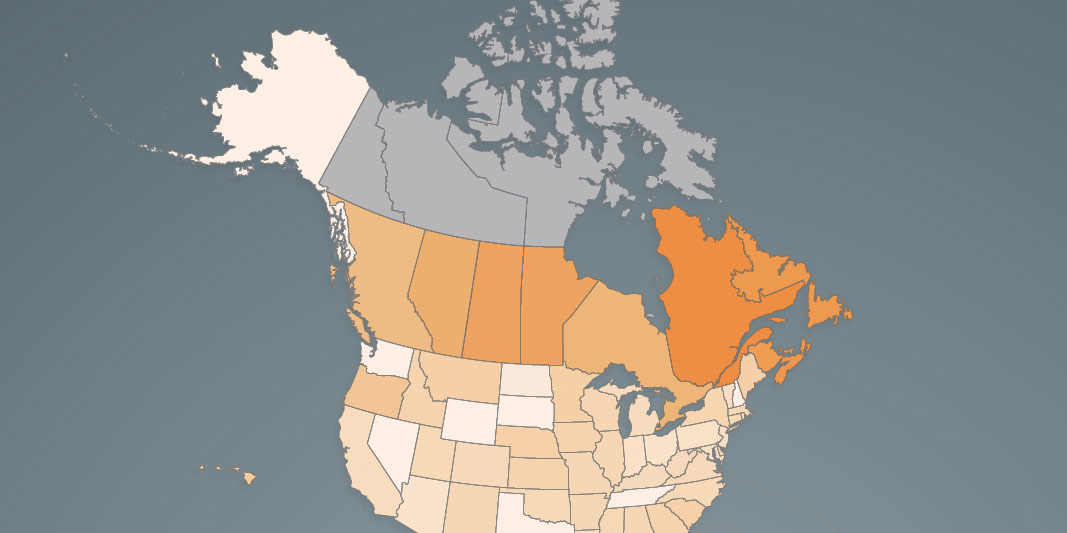
Ontario recorded the shortest total wait time (the wait
between visiting a general practitioner and receiving
treatment), at 13.3 weeks, a decrease from 15 weeks recorded in
2007. British Columbia had the second shortest total wait at 17
weeks, down from 19 weeks in 2007. Manitoba at 17.2 weeks was
third, a decrease from the 20.2 weeks in 2007.
Despite the overall decrease in national median waiting
times, some provinces experienced increases in total wait
times. Saskatchewan has the longest total wait time at 28.8
weeks, an increase from 27.2 in 2007. Nova Scotia jumped to
27.6 weeks from 24.8 in 2007 while Newfoundland & Labrador
had the third longest wait time at 24.4 weeks, up from 24.1
weeks in 2007.
Wait times for the other provinces are 24.3 weeks in PEI,
down from 24.6 in 2007; 23.1 weeks in New Brunswick, down from
25.2 in 2007; 18.7 weeks in Quebec, down from 19.4 weeks in
2007; and 18.5 weeks in Alberta, down from 19.5 in 2007.
The First Wait: Between General Practitioner and
Specialist Consultation
The provinces with the shortest wait times between seeing a
GP and consultation with a specialist are Ontario (7 weeks,
down from 7.6 in 2007), BC (7.1 weeks, down from 8.8 in 2007),
and Manitoba (7.7 weeks, down from 8.2 in 2007).
The longest waits for consultation with a specialist were
recorded in Newfoundland & Labrador (13.3 weeks, down from
13.5 in 2007), Saskatchewan (12.7 weeks, up from 10.8 in 2007),
and Nova Scotia (12.2 weeks, up from 11.2 in 2007).
The Second Wait: Between Specialist Consultation and
Treatment
The waiting time between specialist consultation and
treatment, the second stage of waiting, is the lowest in
Ontario (6.3 weeks, down from 7.3 in 2007). Quebec is the
second lowest (9.3 weeks, down slightly from 9.4 in 2007), with
Alberta third at 9.4 weeks, up from 8.9 in 2007.
The longest waits are found in Saskatchewan (16.1 weeks,
down from 16.5 in 2007), Nova Scotia (15.4 weeks, up from 13.6
in 2007), with PEI coming third at 13.2 weeks (up from 11.9 in
2007).
Waiting by Specialty
Among the various specialties, the shortest total waits
(between referral from a GP and treatment) existed for medical
oncology (4.6 weeks), radiation oncology (5.8 weeks), and
elective cardiovascular surgery (7.3 weeks). Conversely,
patients waited longest between a GP visit and orthopaedic
surgery (36.7 weeks), plastic surgery (35.5 weeks), and
neurosurgery (31.7 weeks).
There were large decreases between 2007 and 2008 in the
waits for internal medicine (down 3.9 weeks), ophthalmology
(down 2.2 weeks), otolaryngology (down 2.1 weeks), orthopaedic
surgery (down 1.4 weeks), urology (down 1.4 weeks), elective
cardiovascular surgery (down 1.1 weeks), while wait times for
gynaecology decreased slightly (down 0.3 weeks). These
decreases were offset by a deterioration for patients receiving
treatment in neurosurgery (up 4.5 weeks), general surgery (up
1.7 weeks), plastic surgery (up 0.7 weeks), medical oncology
(up 0.4 weeks), and radiation oncology (up 0.1 weeks).
Number of Procedures for Which People are
Waiting
Throughout Canada, the total number of procedures for which
people are waiting in 2008 is 750,794, a decrease of 9.3 per
cent from the estimated 827,429 procedures in 2007.
The number of procedures for which people waited fell in
British Columbia, Saskatchewan, Manitoba, Ontario, Quebec, and
Prince Edward Island. Assuming that each person was waiting for
only one procedure, 2.28 per cent of Canadians were waiting for
treatment in 2008, which varied from a low of 1.6 per cent in
Ontario to a high of 4.7 per cent in Nova Scotia.
"Recent polls have identified health care as one of the most
important issues for Canadians. Yet during this election
campaign, there has been virtually no discussion by the various
political parties about what they would do to address the issue
of rationing of care and lengthy wait times for treatment in
Canada's expensive health care system," Esmail said.
"Compared to 1993, wait times are now 86 per cent longer.
It's time for Canada to move past the rhetoric, and the
mistaken belief that more money is the solution to our woes,
and look at models provided by a number of other developed
countries such as Switzerland, where wait times for care are
not taken for granted."