VANCOUVER, BC—
Tax Freedom Day, the day when Canadians start working for themselves after paying off the total tax bill imposed on them by all levels of government , falls on Monday, June 6, two days later than in 2010, according to the Fraser Institute’s annual
Tax Freedom Day calculations.
But the report also warns that
Tax Freedom Day would come 16 days later, on June 22, if governments paid for their current levels of spending with additional taxes, instead of running deficits.
“Finance Minister Jim Flaherty, who coincidentally is scheduled to deliver the federal budget on
Tax Freedom Day, should put forth an aggressive plan that balances the budget within two years through spending cuts. This would provide the fiscal room for a multi-year plan to reduce taxes,” said Niels Veldhuis, Fraser Institute senior economist and co-author of
Canadians Celebrate Tax Freedom Day on June 6, 2011.
“Today’s deficits must one day be paid for by taxes. The longer the government delays balancing its books, the more likely it is that
Tax Freedom Day will fall later in the year.”
Tax Freedom Day is a simple, easy-to-understand measure of the total tax burden imposed on Canadian families by government. If Canadians had to pay all taxes up front, they would have to pay each and every dollar they earned to governments prior to
Tax Freedom Day.
To highlight the wide array of taxes imposed on Canadians and to celebrate
Tax Freedom Day in 2011, the Fraser Institute produced a new, humorous country music video that can be viewed at
www.youtube.com and
www.fraserinstitute.orgA Later Tax Freedom DayThe primary reason
Tax Freedom Day falls on June 6 in 2011, two days later than 2010, is Canada’s improving economy. In 2010 and 2011 the economy rebounded following the recession and Canadians witnessed a later
Tax Freedom Day in both years.
When an economy recovers and incomes increase, a family’s tax burden tends to increase to a greater extent because of Canada’s progressive tax system, which imposes higher taxes as Canadians earn more income. Household consumption also rises, which results in an increase in the amount of sales and other consumption taxes that Canadian families pay.
But Veldhuis points out that several provinces increased taxes in 2011, which contributed to the later
Tax Freedom Day. For example, Quebec increased its provincial sales tax, fuel and mining taxes, and health tax. British Columbia increased its Medical Services Plan premiums, while Manitoba and Prince Edward Island both increased tobacco taxes.
Total Tax Bill In 2011, the average Canadian family (with two or more individuals) will earn $93,831 (which includes not just wages and salaries, but interest, dividends, private and government pension payments, old age pension payments, and other transfers from governments) and pay a total of $39,960 in taxes, for a total tax bill amounting to 42.6 per cent of its income.
Among the many taxes Canadian families pay, incomes taxes increased the most—by $550—while sales taxes jumped by $335.
“Canadians are taxed by federal, provincial, and local governments in ways that are both obvious, such as income tax, and ways that are hidden, such as alcohol, amusement, and gasoline taxes,” Veldhuis said.
“It’s virtually impossible for the ordinary citizen to know exactly how much tax they are paying.
Tax Freedom Day gives Canadians a true picture of their total tax burden and thereby allows Canadians to consider whether they get value for their tax dollars.”
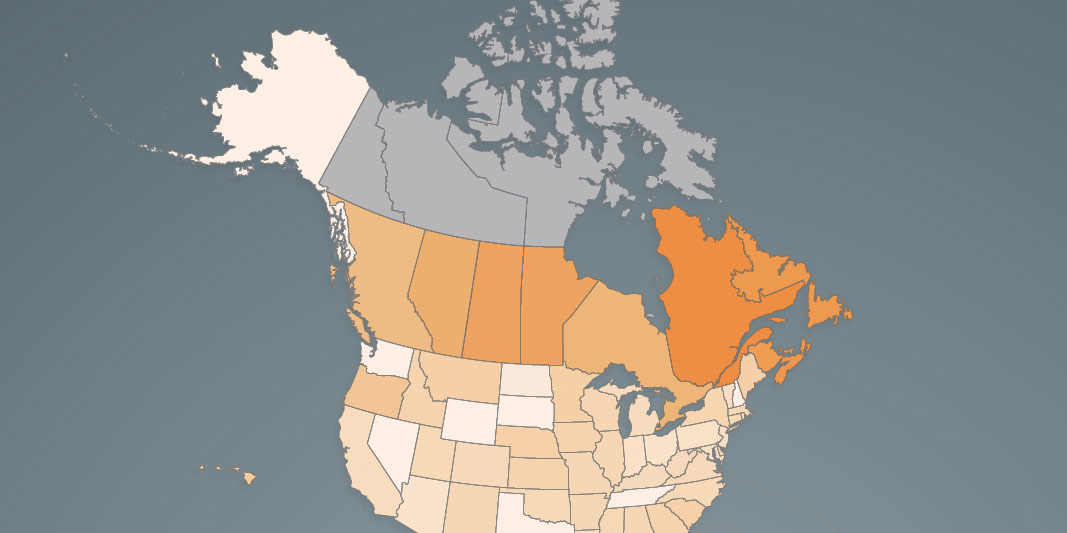
Tax Freedom Day among the ProvincesTax Freedom Day varies from province to province, depending on the taxation levels of provincial and local governments. Alberta continues to enjoy the earliest
Tax Freedom Day on May 18, followed by Prince Edward Island on May 27, then New Brunswick on May 31. Manitoba’s
Tax Freedom Day falls on June 1, followed by Ontario (June 4), Saskatchewan and British Columbia (June 6), Nova Scotia (June 7), and Quebec on June 10. Newfoundland and Labrador has the latest
Tax Freedom Day, June 19.
All Canadian provinces, except Saskatchewan and Newfoundland and Labrador, experienced a later
Tax Freedom Day in 2011 than in 2010. Quebec recorded the largest increase in Tax Freedom Day, four days later than in 2010.
Several provinces, including Newfoundland and Labrador and Saskatchewan, have significant natural resources which provide the provinces with royalties. However, there is an ongoing debate about whether natural resource royalties are actually a tax. If natural resources royalties are excluded from the
Tax Freedom Day calculations,
Tax Freedom Day is 26 days earlier in Newfoundland and Labrador, 10 days earlier in Saskatchewan, seven days earlier in Alberta, and three days earlier in British Columbia.
As is the case every year,
Tax Freedom Day calculations are based on forecasts of personal income, and on federal and provincial budget tax revenue. When final revenue numbers become available at the end of each fiscal year and personal income data are updated by Statistics Canada, we revise our
Tax Freedom Day calculations for previous years.
Canadians can calculate their personal
Tax Freedom Day using the Fraser Institute’s Personal
Tax Freedom Day Calculator at
www.fraserinstitute.org