



CALGARY, AB-Canadians seeking surgical or other therapeutic
treatment are enduring a median wait time of 16.1 weeks,
roughly the same delay they experienced in 2000-2001, even
though governments have made substantial increases in health
care spending since then, according to the Fraser Institute's
annual report on hospital wait times.
"After nearly 10 years of spending increases, Canadians are
still waiting 113 days, on average, for medically necessary
treatment, just as in 2000-2001. While that wait time is
shorter than it was last year, it is still a far cry from what
Canadians should expect from their expensive health care
program," said Nadeem Esmail, Fraser Institute Director of
Health System Performance Studies and author of the 19th annual
edition of
Waiting Your Turn: Hospital Waiting Lists in Canada
.
"Throwing more money at a fundamentally broken system will
not solve the wait time problem. Canadians deserve health care
they can depend on, and it's time for politicians of all
political stripes to admit the current system is a
failure."
The hospital waiting list survey measures median waiting
times to document the degree to which queues for visits to
specialists and for diagnostic and surgical procedures are used
to control health care expenditures. The report measures the
wait times between referral by a general practitioner and
consultation with a specialist, the times between seeing the
specialist and receiving treatment, and the total wait times
from GP referral to treatment.
This year's report shows the main decrease in wait times
occurred in the time between a consultation with a specialist
and receiving treatment, which decreased to 8.0 weeks from 8.7
weeks in 2008.
"While this is indeed an improvement since 2008, our
research shows this delay for treatment is well above what
health care professionals would consider clinically reasonable,
which is a median wait of 5.8 weeks," said Esmail.
According to the report, the median wait time to see a
specialist after a referral from a general practitioner also
dropped since last year from 8.5 weeks to 8.2.
Total waiting time
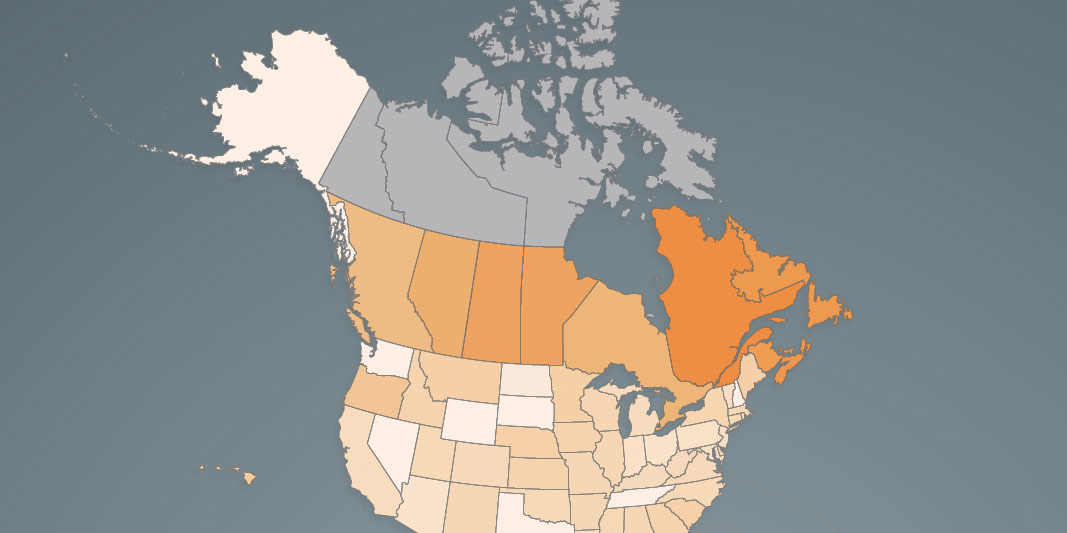
Ontario recorded the shortest total wait time (the wait
between referral by a general practitioner and receiving
treatment), at 12.5 weeks, a decrease from 13.3 weeks in 2008.
Manitoba had the second shortest total wait at 14.3 weeks, down
from 17.2 weeks in 2008. Quebec at 16.6 weeks was third, a
decrease from 18.7 weeks in 2008.
Despite the overall decrease in national median waiting
times since 2008, some provinces experienced increases in total
wait times. Newfoundland & Labrador had the longest total
wait time at 27.3 weeks, an increase from 24.4 in 2008. PEI
jumped to 26.7 weeks from 24.3 in 2008 while New Brunswick had
the third longest wait time at 25.8 weeks, up from 23.1.
Alberta rose to 19.6 weeks, up from 18.5 in 2008.
Wait times for the other provinces are 25.2 weeks in
Saskatchewan, down from 28.8 in 2008; 23.1 weeks in Nova
Scotia, down from 27.6 in 2008; and 17.0 weeks in British
Columbia, the same as last year.
The first wait: Between general practitioner and
specialist consultation
The provinces with the shortest wait times between referral
by a general practitioner and consultation with a specialist
are Manitoba (6.3 weeks), Ontario (6.7 weeks), and BC (7.8
weeks).
The longest waits for consultation with a specialist were
recorded in PEI (14.5 weeks), New Brunswick (14.3 weeks), and
Newfoundland & Labrador (14.0 weeks).
The second wait: Between specialist consultation and
treatment
The waiting time between specialist consultation and
treatment, the second stage of waiting, is the lowest in
Ontario (5.8 weeks). Manitoba is the second lowest (8.0 weeks),
and Quebec is third at 8.2 weeks.
The longest waits are found in Saskatchewan (14.0 weeks),
Newfoundland & Labrador (13.2 weeks), and PEI at 12.2
weeks.
Waiting by specialty
Among the various specialties, the shortest total waits
(between referral from a GP and treatment) existed for
radiation oncology (4.8 weeks), medical oncology (5.1 weeks),
and elective cardiovascular surgery (8.2 weeks). Conversely,
patients waited longest between a GP referral and orthopedic
surgery (33.7 weeks), neurosurgery (32.9 weeks), and plastic
surgery (29.9 weeks).
There were large decreases between 2008 and 2009 in the
waits for plastic surgery (down 5.6 weeks), ophthalmology (down
3.4 weeks), orthopedic surgery (down 3.0 weeks), radiation
oncology (down 1.0 week), and general surgery (down 0.9 weeks),
while wait times for internal medicine decreased slightly (down
0.2 weeks). These decreases were offset by a deterioration for
patients receiving treatment in otolaryngology (up 1.2 weeks),
neurosurgery (up 1.2 weeks), elective cardiovascular surgery
(up 0.8 weeks), urology (up 0.6 weeks), medical oncology (up
0.5 weeks), and gynecology (up 0.1 weeks).
Number of procedures for which people are
waiting
Throughout Canada, the total number of procedures for which
people are waiting in 2009 is 694,161, a decrease of 7.5 per
cent from the estimated 750,794 procedures in 2008.
Assuming that each person was waiting for only one
procedure, 2.08 per cent of Canadians were waiting for
treatment in 2009, which varied from a low of 1.49 per cent in
Ontario to a high of 4.29 per cent in Newfoundland &
Labrador.
"In spite of large increases in health spending, Canadians
are waiting 73 per cent longer for surgery than they did in
1993. Clearly, Canada needs to adopt the health care approaches
of other developed countries, like Switzerland for example,
where wait times for care are not taken for granted. It's about
time Canadians stop overpaying for a defective system and start
getting the timely access to health care they need, deserve,
and are already paying for," said Esmail.