





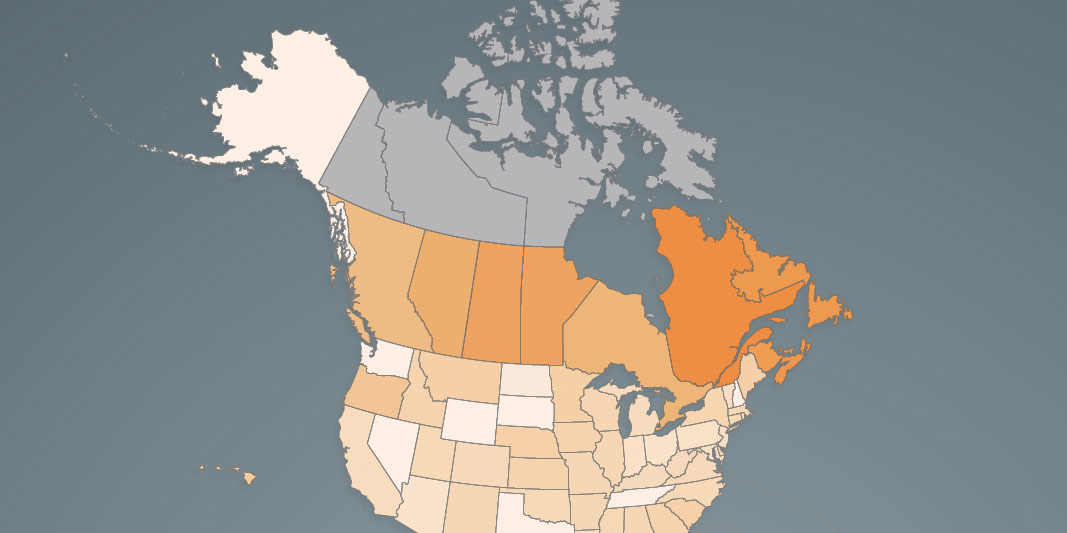
CALGARY, AB-Canadians seeking psychiatric treatment waited
longer in 2008 than they did in 2007, according to research on
health care waiting times published by independent research
organization The Fraser Institute.
The national median wait time for Canadians seeking
psychiatric treatment increased slightly to 18.6 weeks in 2008,
an increase from the 18.5 weeks recorded in 2007. This is in
contrast to median wait times for surgical treatment which
decreased to 17.3 weeks in 2008.
"The national median wait time for psychiatric care measured
in 2008 exceeds the longest national median wait time we have
ever measured for physical treatment by approximately two
days," said Nadeem Esmail, Fraser Institute Director of Health
System Performance Studies and co-author of the 18th annual
edition of
Waiting Your Turn: Hospital Waiting Lists in Canada.
The psychiatric wait times report
is contained as an appendix in Waiting Your Turn: Hospital Waiting Lists in
Canada, the Institute's annual survey of hospital waiting times. The
survey measures the median time a patient waits to begin a
treatment program after being referred by a general
practitioner to a psychiatric specialist.
The shortest overall waiting times were recorded in Manitoba
(15.8 weeks), British Columbia (16.3 weeks) and Ontario (17
weeks).
The longest total wait times were recorded in Prince Edward
Island (54 weeks), Newfoundland & Labrador (33.3 weeks),
and Alberta (29.8 weeks).
Quebec, which had the lowest median psychiatric wait times
in 2007 (15.9 weeks), saw wait times increase to 17.2 weeks
while Prince Edward Island experienced an astounding 15.3 week
increase compared to 2007 when its total wait time was 38. 7
weeks.
The research found that the time spent waiting for treatment
after an appointment with a specialist was longer than the wait
to see a specialist after GP referral. Prince Edward Island had
the longest wait for treatment after seeing a specialist (48
weeks), followed by Newfoundland & Labrador (21.3 weeks),
Nova Scotia (19.2 weeks), then Alberta (17.8 weeks).
British Columbia had the shortest wait time between seeing a
specialist and receiving treatment (8.3 weeks), followed by
Quebec (9. 2 weeks), then Ontario (10 weeks). Across Canada,
the median wait time was 10.7 weeks.
Breaking the total waiting time down into its two other
components - the wait to see a specialist after referral on an
urgent or elective basis - also shows variation among
provinces. The median waiting time to see a psychiatrist on an
urgent basis was 1.8 weeks in Canada, ranging from one week in
Prince Edward Island to two weeks in British Columbia, Alberta,
Saskatchewan, Ontario, and Nova Scotia.
The waiting time for referrals on an elective basis for
Canada as a whole was 7.9 weeks. The longest waiting time for
elective referrals was in Saskatchewan (18 weeks), followed by
Alberta, New Brunswick, and Newfoundland & Labrador all at
12 weeks. The shortest wait for an elective referral was in
Manitoba (4.5 weeks), followed by Prince Edward Island (six
weeks), then Nova Scotia (6.5 weeks).
Among specific treatments surveyed, patients waited longest
to enter a housing program (21.3 weeks, up from 18.8 weeks in
2007) or a sleep disorders program (15.7 weeks, down from 16.6
weeks in 2007). Wait times were shortest for pharmacotherapy
(4.2 weeks, up from 3.9 weeks in 2007), and admission to a day
program (6.6 weeks, down from seven weeks in 2007).
Physicians were also asked to provide clinically reasonable
waiting times for various psychiatric treatments. Generally,
they reported wait times substantially shorter than what
patients are actually waiting. In 97 per cent of cases, the
actual median waiting time for treatment is greater than the
clinically reasonable median waiting time. Nationally, the
actual waiting time is nearly 170 per cent longer than what
specialists feel is appropriate.
"Governments across Canada give the appearance of taking
action on surgical wait times by defining priority areas and
creating wait time guarantees. But they seem to have missed the
reality that delays in receiving medical care in Canada are
experienced outside of the physical disciplines of medicine.
Long wait times for access to medical care are a reality for
patients in need of mental health services as well," Esmail
said.
"When it comes to mental health, there remains little action
and little discussion. Canada's decision makers need to move
past the rhetoric and the mistaken belief that more money is
the solution to our woes. We need a wholesale re-examination of
Canada's overall health care system, one that is not founded in
a belief that waiting for health care is a necessary evil
Canadians must endure."