Study
| EST. READ TIME 2 MIN.More than one-in-five Canadian households earning less than $55,000 suffer from energy poverty
Energy Costs and Canadian Households: How Much Are We Spending? 2025 Edition
- This study examines energy spending by Canadian households and the extent of energy poverty, defined as households spending at least 10% of their total expenditures on energy goods.
- Between 2019 and 2021, Canadian households spent approximately two percent of their total expenditures on within-the-home energy goods (electricity, natural gas, and other heating fuels) and around five percent when gasoline is included. When only energy used within the home was included in the calculations, 6.2% of households were classified as energy poor in 2021, up slightly from 4.7% in 2019. When the gasoline expenses of Canadian households are also included, 11.0% of households were classified as energy poor in 2021, down slightly from 12.3% in 2019.
- Regional disparities in energy poverty are pronounced. In 2021, Atlantic Canada had the highest incidence of energy poverty – 24.6% of households – when gasoline expenditures were included, while British Columbia had the lowest in the country, at 8.1%.
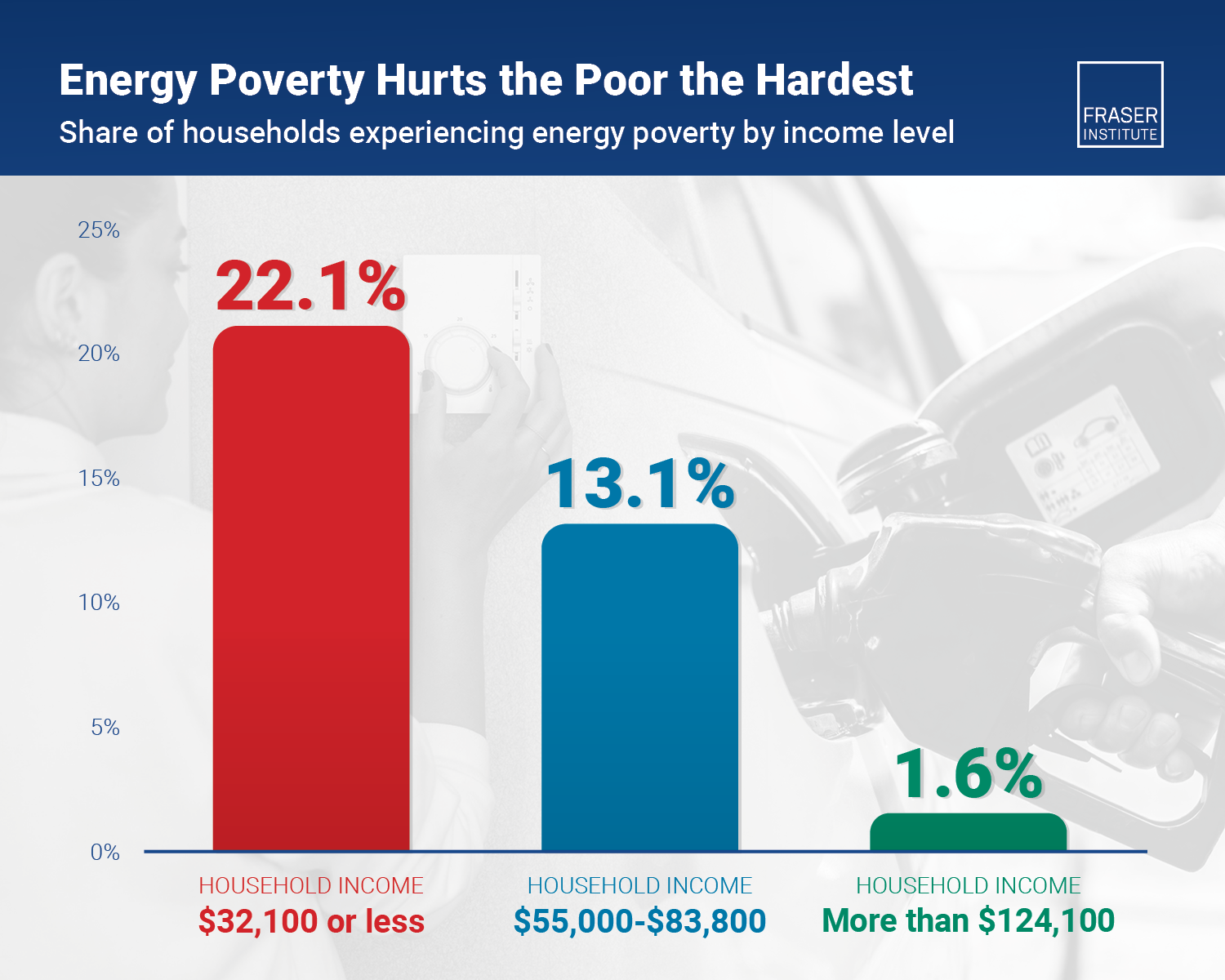
- Energy poverty disproportionately affects lower-income households. In 2021, 22.1% of households in the lowest income quintile (earning $31,200 or less) and 20.7% in the second-lowest quintile (earning $31,200 to $55,000) experienced energy poverty when gasoline expenses were included.
- The high incidence of energy poverty in Canada, particularly among low-income families, should be a key consideration in energy policy development. Policies that raise energy prices and result in higher energy costs could exacerbate the problems faced by families who are already energy poor and force more households into energy poverty.
Share
-
Elmira Aliakbari
Director, Natural Resource Studies, Fraser Institute
Elmira Aliakbari is Director of the Centre for Natural Resource Studies at the Fraser Institute. She received a Ph.D. in Economicsfrom the University of Guelph, and M.A. and B.S. degrees in Economics, both from the University of Tehran in Iran. She has studied public policy involving energy and the environment for nearly eight years. Prior to joining the Fraser Institute, Ms. Aliakbari was Director of Research, Energy, Ecology and Prosperity with the Frontier Center for Public Policy. She has presented her work at many academic conferences and has been published in the prestigious academic journal Energy Economics. Ms. Aliakbari’s research has been discussed in prominent media outlets including the Wall Street Journal, and her commentaries have appeared in major Canadian and American newspapers such as the Globe and Mail, Washington Times, National Post, and Financial Post.… Read more Read Less… -
Kevin Chan
Kevin Chan is a policy analyst and researcher with a Master of Public Policy from the University of Calgary (2024)and a Master of Arts in Social Science from the University of Chicago (2020), currently working at CNOOC Petroleum North America.Previously, Kevin was a Research Analyst Intern at the Fraser Institute, where he focused on economics and energy policy.… Read more Read Less…
Related Topics
Related Articles
High oil prices, Canadian producers and pipeline access
By: Finn Poschmann
Fossil fuels remain a major pillar of the Canadian economy
By: Julio Mejía and Elmira Aliakbari
Rising government debt interest—a major risk in Atlantic Canada
By: Alex Whalen