Study
| EST. READ TIME 2 MIN.Alberta most attractive destination for Canadians moving between provinces; Newfoundland and Labrador, Manitoba and Saskatchewan least attractive
Interprovincial Migration in Canada, 1995–2024: What Do the Numbers Tell Us?
- Patterns of interprovincial migration indicate the relative attractiveness of a given province as a place to live and work and have significant economic and fiscal impacts upon both migrants and provinces across Canada.
- This study examines interprovincial migration in Canada between 1995/96 and 2024/25 in total, by age group, and by province of origin or destination.
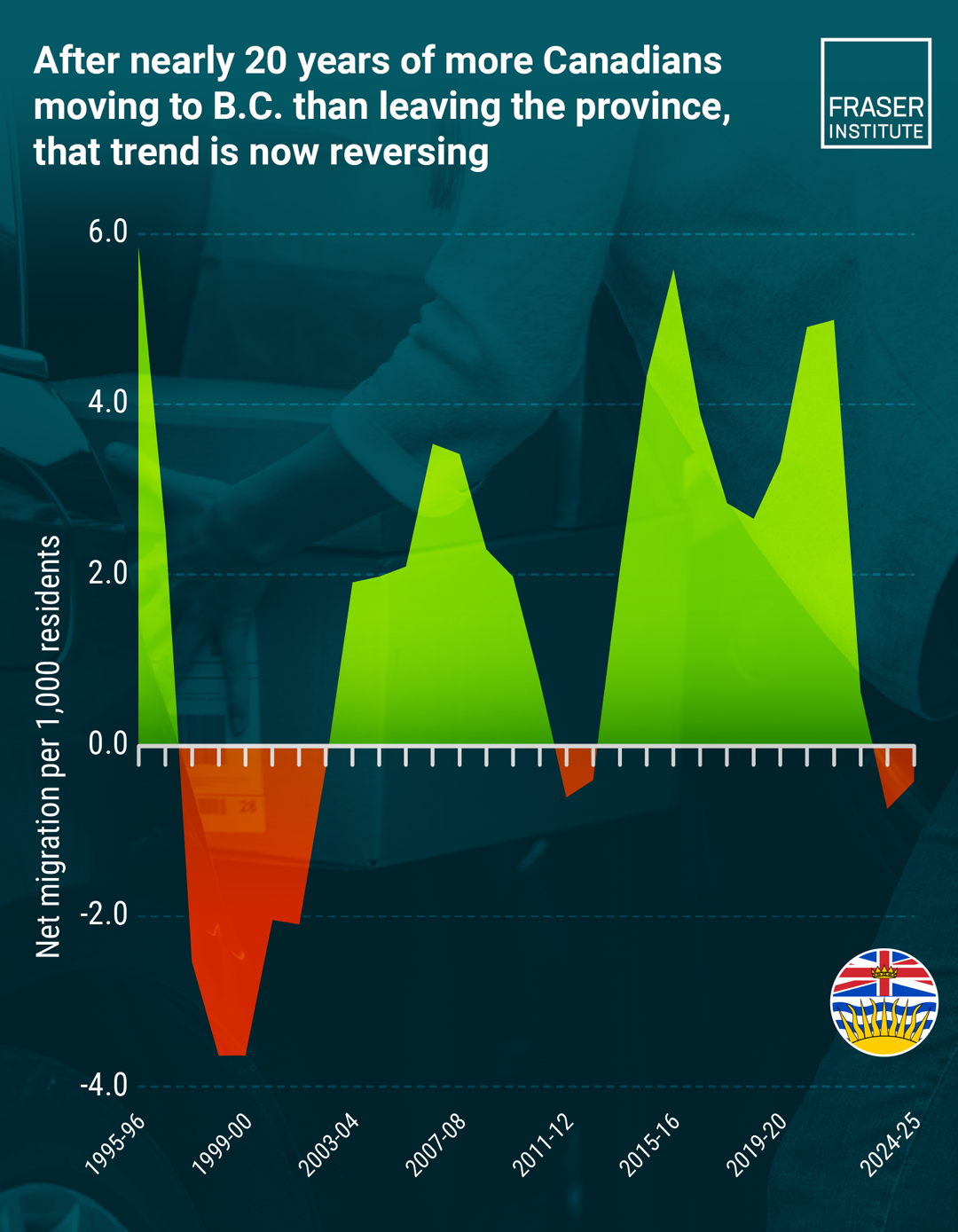
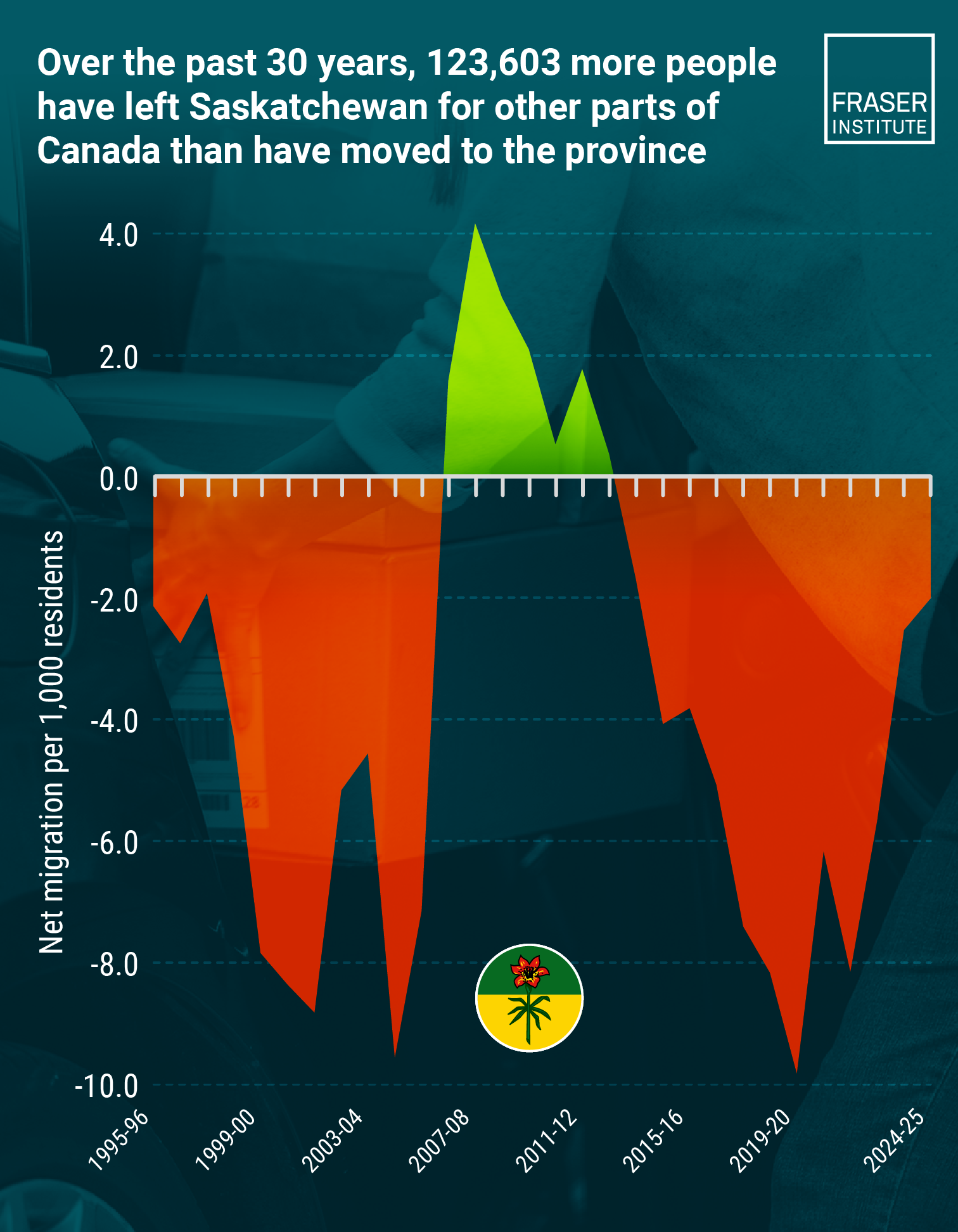
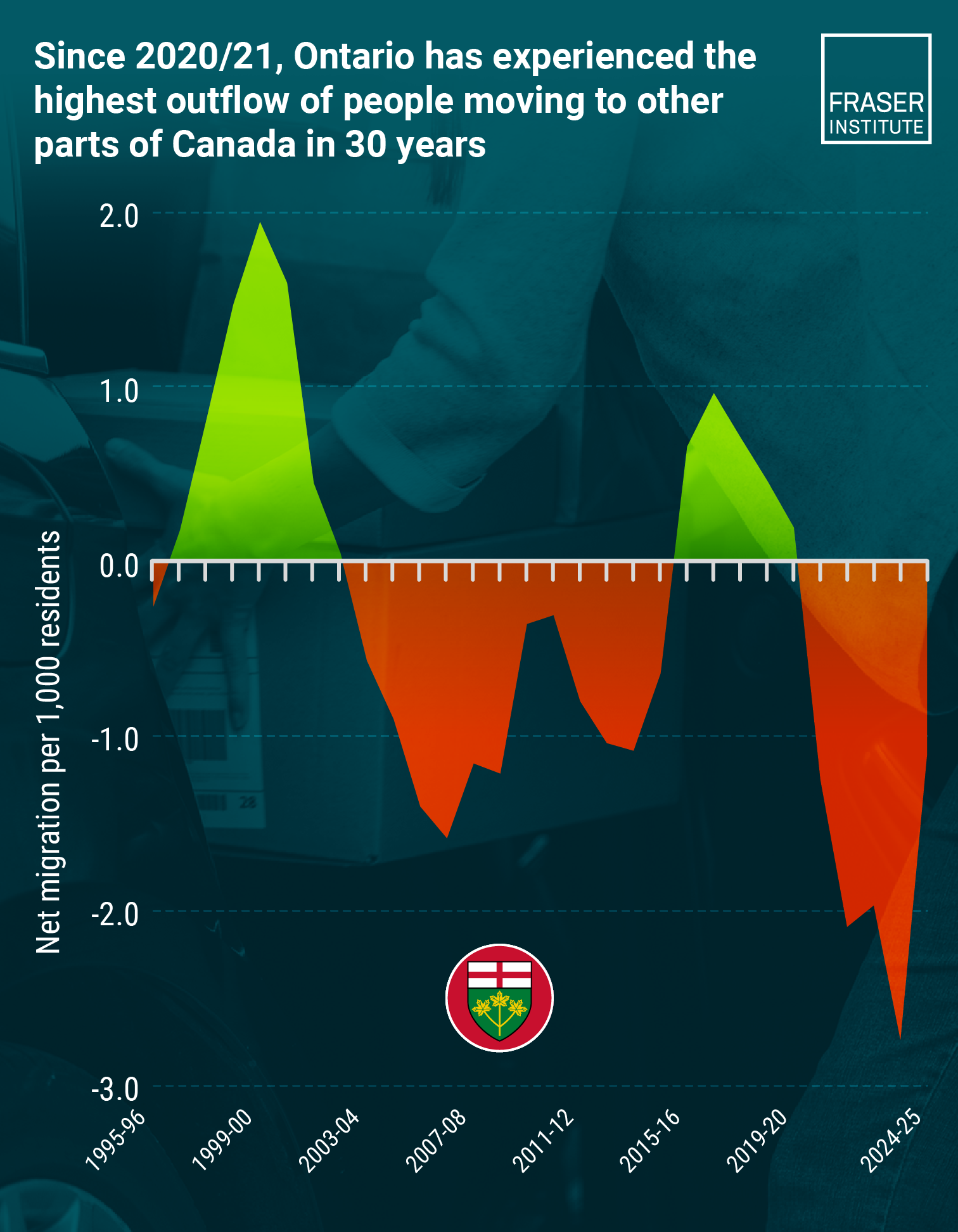
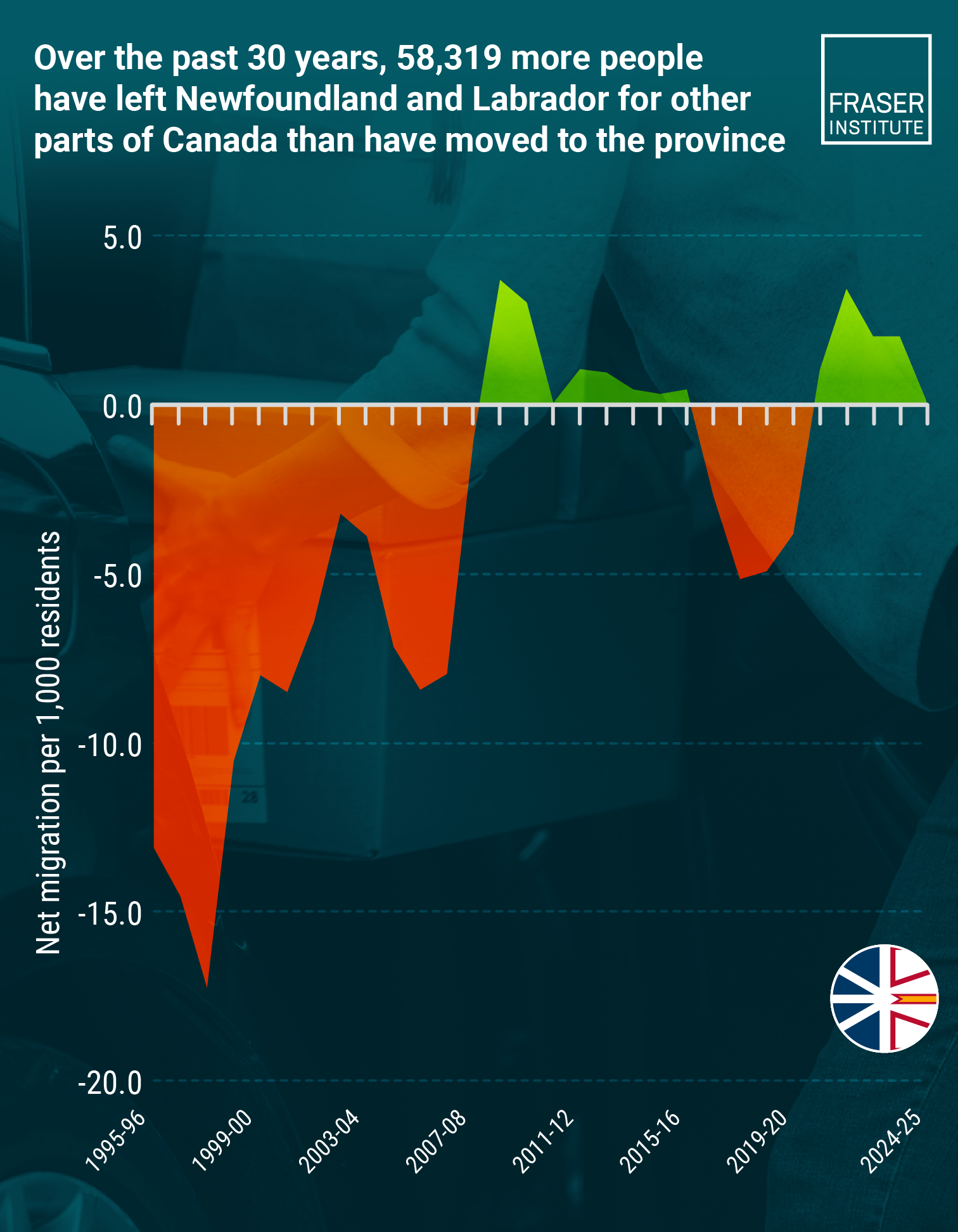
- In total, Alberta (538,824) and British Columbia (214,883) experienced the largest absolute levels of net in-migration, while Quebec (255,988) and Ontario (168,166) experienced the most net out-migration. However, relative to their respective populations, Newfoundland & Labrador, Manitoba, and Saskatchewan experienced the largest levels of net out-migration.
- Alberta and British Columbia were the only provinces to attract net in-migration across all age groups. Notably, Alberta was the top destination for younger migrants, attracting 192,329 net in-migrants aged 18 to 24 between 1995/96 and 2024/25.
- The Atlantic provinces—except Nova Scotia—generally saw net out-migration of those younger than 44 years old, and net in-migration of those aged 45 and older. Newfoundland & Labrador in particular saw the equivalent of 97.3% of its 2025 population aged 18 to 24 leave (on net) over the past three decades.
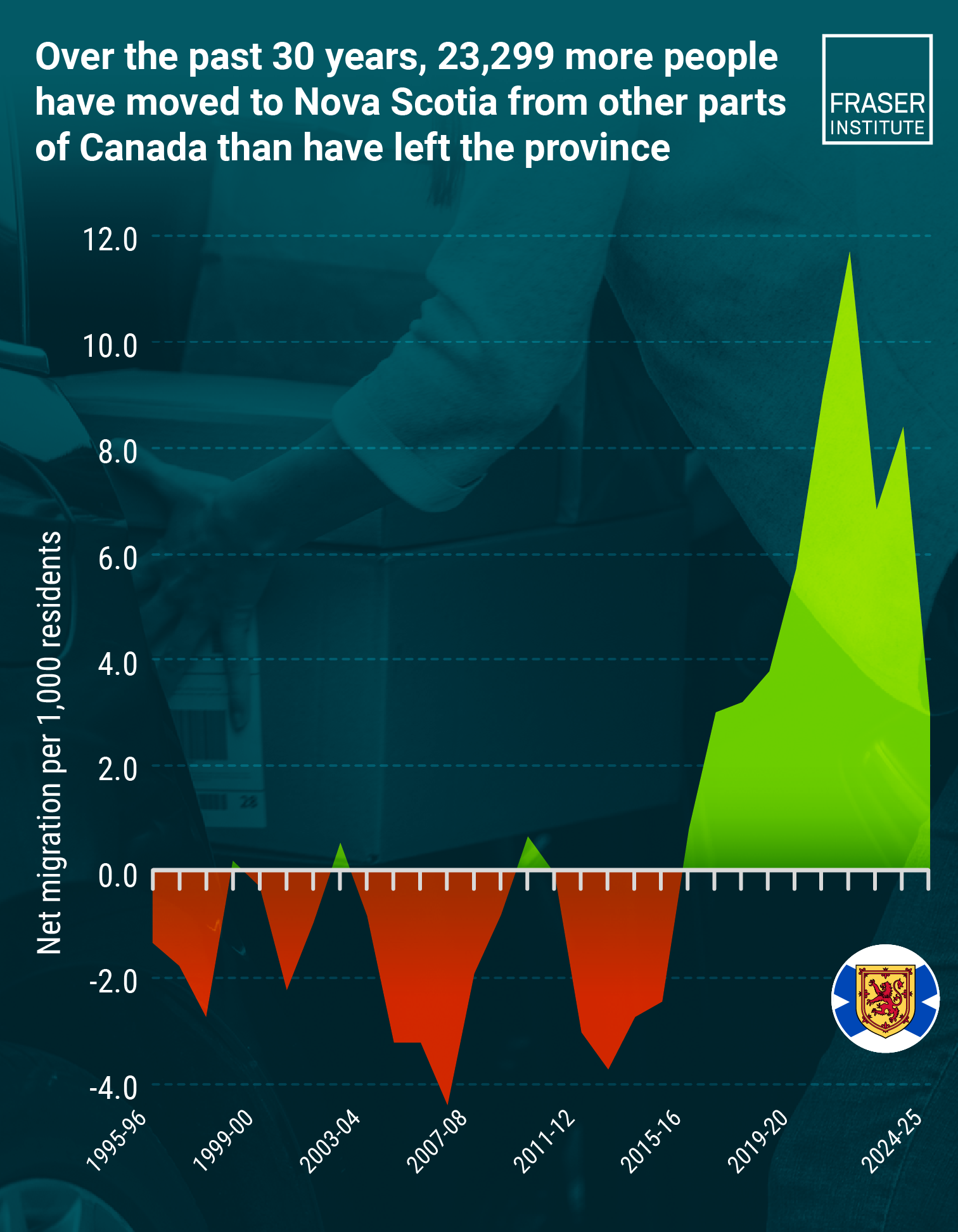
- Alberta, British Columbia, and Nova Scotia attracted net in-migrants from the majority of—in Alberta’s case all—other provinces during this period. Conversely, Newfoundland & Labrador saw migrants leave (on net) to every other province in Canada.
- Generally, Alberta stands out as the most attractive destination for interprovincial migrants in recent decades, while Newfoundland & Labrador is the least attractive.





-

Grady Munro
Grady Munro is a former Senior Policy Analyst at the Fraser Institute. He holds a Bachelor of Arts in Economicsfrom Macalester College in Minnesota, and a Master’s Degree in Public Policy at the University of Calgary. Mr. Munro’s commentaries have appeared in major Canadian newspapers including the Globe and Mail, Financial Post, and Toronto Sun. His research focuses on government spending, debt, and taxation.… Read more -

Milagros Palacios
Director, Addington Centre for Measurement, Fraser Institute
Milagros Palacios is the Director for the Addington Centre for Measurement at the Fraser Institute. She holds a B.S. inIndustrial Engineering from the Pontifical Catholic University of Peru and a M.Sc. in Economics from the University of Concepción, Chile. Ms. Palacios has studied public policy involving taxation, government finances, investment, productivity, labour markets, and charitable giving, for nearly 20 years. Since joining the Institute, Ms. Palacios has authored or coauthored over 200 comprehensive research studies, 300 commentaries and four books. Her recent commentaries have appeared in major Canadian newspapers such as the National Post, Toronto Sun, Windsor Star, and Vancouver Sun.… Read more -

William Dunstan
William Dunstan is a former Junior Policy Analyst at the Fraser Institute. He has a Bachelor of Public Affairs andPolicy Management from Carleton University, and a Master of Public Policy degree from the University of Calgary.… Read more