Study
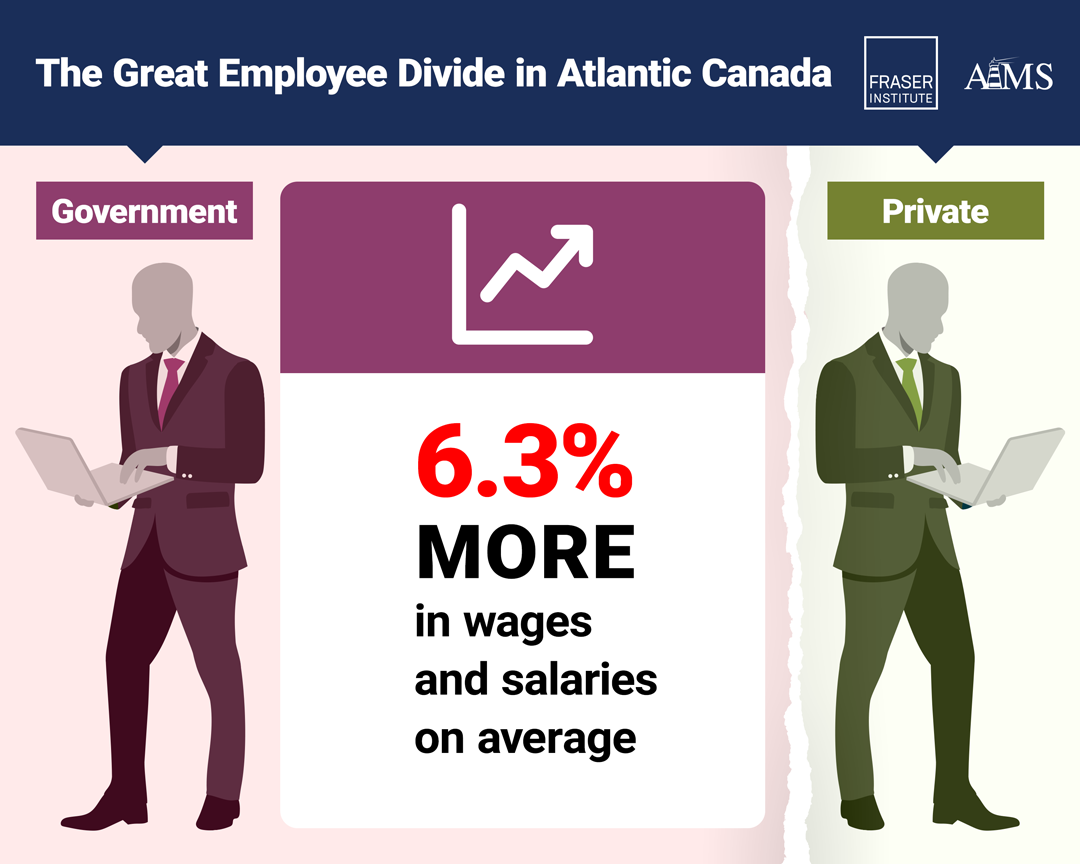
| EST. READ TIME 2 MIN.Government workers in Atlantic Canada receive 6.3% higher wages on average than private-sector workers
-

Milagros Palacios
Director, Addington Centre for Measurement, Fraser Institute
Milagros Palacios is the Director for the Addington Centre for Measurement at the Fraser Institute. She holds a B.S. inIndustrial Engineering from the Pontifical Catholic University of Peru and a M.Sc. in Economics from the University of Concepción, Chile. Ms. Palacios has studied public policy involving taxation, government finances, investment, productivity, labour markets, and charitable giving, for nearly 20 years. Since joining the Institute, Ms. Palacios has authored or coauthored over 200 comprehensive research studies, 300 commentaries and four books. Her recent commentaries have appeared in major Canadian newspapers such as the National Post, Toronto Sun, Windsor Star, and Vancouver Sun.… Read more -

Nathaniel Li
Senior Economist, Fraser InstituteNathaniel Li is a Senior Economist at the Fraser Institute. He holds a B.A. from the Fudan University in China anda Ph.D. in Food, Agricultural and Resource Economics from the University of Guelph. Prior to joining the Fraser Institute, he worked for the University of Toronto as a postdoctoral fellow and the University of Guelph as a research associate. His past research work has been published in many high-quality, peer-reviewed academic journals, including the Applied Economic Perspectives and Policy, Agricultural Economics, Preventive Medicine, and Canadian Public Policy. His current research covers a wide range of issues in fiscal, education, and labour-market policies.… Read more -

Grady Munro
Grady Munro is a former Senior Policy Analyst at the Fraser Institute. He holds a Bachelor of Arts in Economicsfrom Macalester College in Minnesota, and a Master’s Degree in Public Policy at the University of Calgary. Mr. Munro’s commentaries have appeared in major Canadian newspapers including the Globe and Mail, Financial Post, and Toronto Sun. His research focuses on government spending, debt, and taxation.… Read more -

Jake Fuss
Director, Fiscal Studies, Fraser Institute
Jake Fuss is Director of Fiscal Studies for the Fraser Institute. He holds a Bachelor of Commerce and a Master’s Degree inPublic Policy from the University of Calgary. Mr. Fuss has written commentaries appearing in major Canadian newspapers including the Globe and Mail, Toronto Sun, and National Post. His research covers a wide range of policy issues including government spending, debt, taxation, labour policy, and charitable giving.… Read more